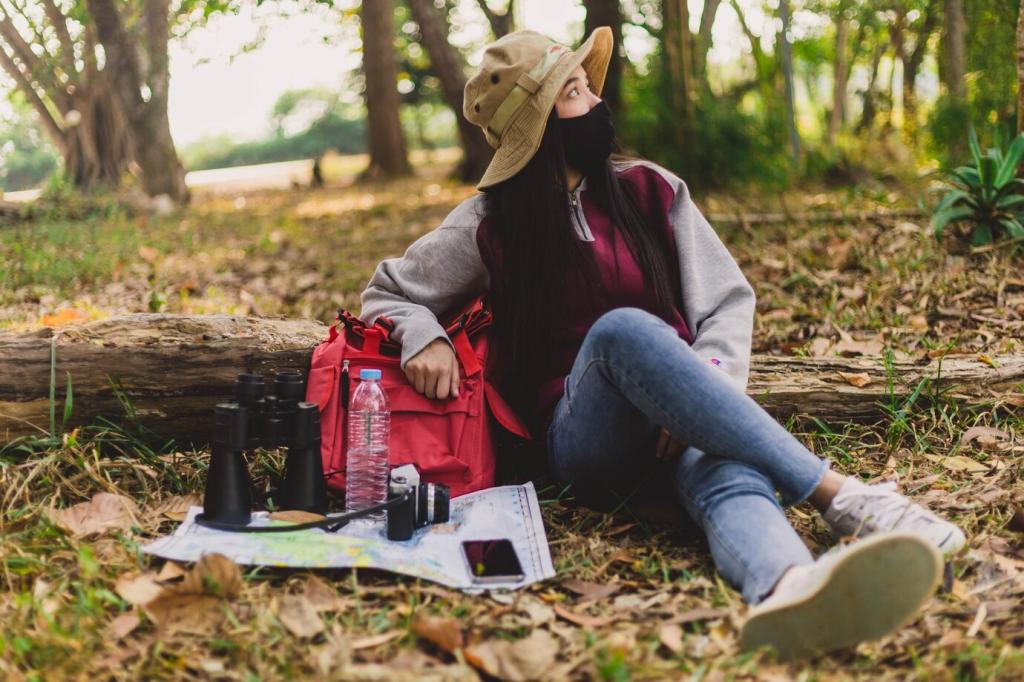
Trail labels like easy, moderate, and hard rarely tell the whole story. Elevation gain, steepness, footing, and altitude matter more. Start with shorter mileage, moderate climb, and stable surfaces to build confidence.
Estimate Time Using Naismith’s Rule
A handy planning tip: Naismith’s Rule adds roughly thirty minutes for every 1,000 feet (300 meters) of ascent to your normal pace. Plan buffer time for photos, snacks, weather shifts, and navigation pauses.
Check Conditions, Permits, and Daylight
Look up recent trip reports for snow, blowdowns, or washed-out bridges. Verify permits and parking requirements. Count your available daylight, then set a turnaround time you will honor, even if the summit tempts.
Master Layering: Base, Mid, and Shell
Mountains create swift weather swings. Wear a moisture-wicking base, an insulating mid layer, and a windproof, waterproof shell. Avoid cotton; it traps moisture and chills. Pack gloves and a warm hat year-round.
Footwear and Sock Strategy
Comfort begins at your toes. Choose boots or trail shoes with a thumb’s width of toe room, supportive midsoles, and grippy tread. Pair with wool or synthetic socks and consider liners to prevent blisters.
Organize Your Pack for Balance
Heavy items ride close to your spine, centered and mid-back. Keep often-used essentials accessible. For day hikes, aim for roughly ten to fifteen percent of body weight, prioritizing water, insulation, and navigation tools.
Training Your Body for the Climb
Build Aerobic Capacity Slowly
Mix brisk walks, stair climbs, and easy jogs to raise your endurance. Keep most sessions conversational, adding short hill repeats weekly. Consistency, not suffering, makes your first mountain hike feel surprisingly doable.
Strengthen Legs, Core, and Balance
Prioritize step-ups, lunges, calf raises, and planks. Practice single-leg balance while brushing your teeth. Strong glutes stabilize knees on descents, while a trained core keeps you upright under a shifting pack.
Rehearse with a Loaded Pack
Do neighborhood loops or local trail walks carrying your actual gear. Adjust straps until the hip belt bears weight and shoulder straps stabilize, not squeeze. Small experiments now prevent big discomfort later.
Safety, Navigation, and Weather Smarts
Temperature typically drops about 6.5°C per 1,000 meters (3.6°F per 1,000 feet). Wind amplifies chill, and storms build quickly near ridgelines. Check forecasts from multiple sources and watch clouds as if they were clocks.
Food, Hydration, and Energy Management
Aim for steady sipping—roughly half a liter per hour in moderate conditions, more in heat or altitude. Add electrolytes for longer days. Mark your bottle to track intake and keep it reachable.
Stay on durable surfaces, pack out every scrap, and give wildlife distance. Avoid shortcutting switchbacks. If nature calls, follow local rules and bury waste properly. Leave the place better than you found it.
Uphill hikers generally have the right of way. Greet others, step aside safely, and keep voices low in sensitive habitats. A quick smile builds community—you belong here, and your kindness sets the tone.